12th Century Cambodian Artifacts

12th Century Cambodian Artifacts
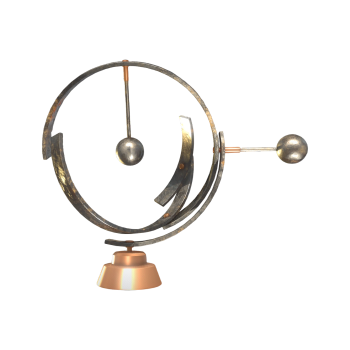
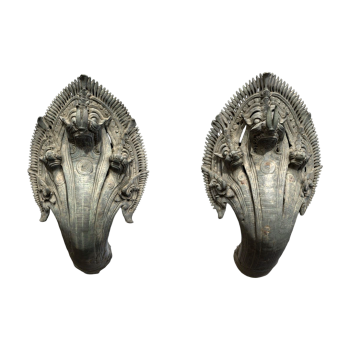
This pair of works is "The Snake God (Naga) Decorative Top", created in the 12th century AD (Angkor Wat period). This artwork is from Cambodia and is made of bronze. The overall size is 29.2 x 15.2 x 15.2cm (about 11 1/2 x 6 x 6 inches). It is currently in the Cleveland Museum of Art.
Qianlong Ancient Yuexuan Porcelain

Qianlong Ancient Yuexuan Porcelain

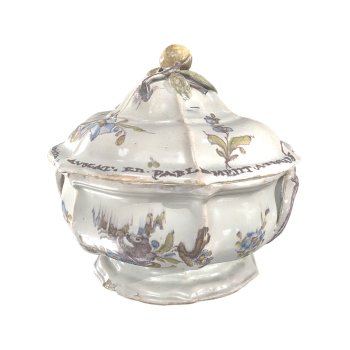
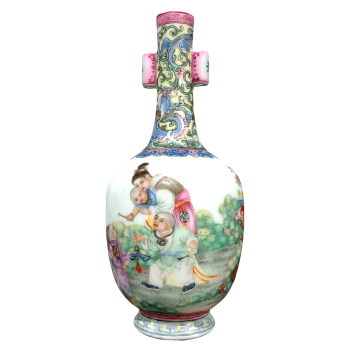
This porcelain vase was made between 1736 and 1795. It belongs to China's Qing Dynasty (1644-1911) and Qianlong (1736-1795). The porcelain vase is decorated with colored franc glaze and belongs to "ancient yuexuan porcelain". The overall height of the porcelain vase is 15.4cm (6 and 1/16 inches). This porcelain vase is currently in the collection of the Cleveland Museum of Art, funded by the John L. Severance Foundation (collection number: 1963.514).
Peony pattern water container

Peony pattern water container

This artwork called "Peony Pattern Water Container" was created by Japanese artist Seif ū Yohei III (1851-1914), and was made between 1900 and 1914. It is made of porcelain, with a molded and carved design on the surface, and a green glaze. The overall height is 17.8cm (7 inches) and the diameter is 16cm (6 5/16 inches). The artwork is currently in the collection of the Cleveland Museum of Art and was donated by James and Christine Hoysinger.
Crane and Snake

Crane and Snake

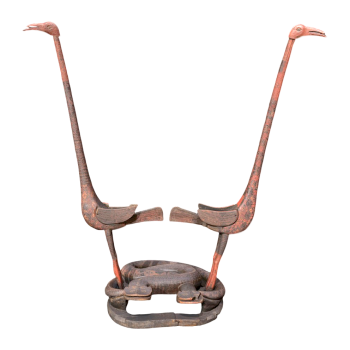
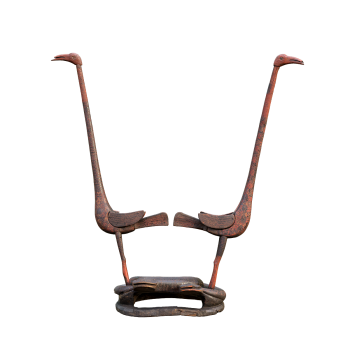
The artwork, titled "Crane and Snake", is from Changsha, Hunan Province, China, and belongs to the Warring States Period (475-221 BC) and the State of Chu (about 1046-223 BC). It is made of painted wood and has overall dimensions of 132.1 x 124.5cm (52 x 49 in). The artwork is currently in the collection of the Cleveland Museum of Art.
The Three Legged Cauldron of the Shang Dynasty in China - Cleveland Museum of Art

The Three Legged Cauldron of the Shang Dynasty in China - Cleveland Museum of Art

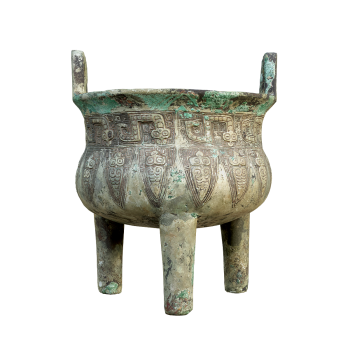
The tripod collected by the Cleveland Museum of Art is a bronze artifact from the Shang Dynasty in China, dating back to approximately 1200 to 1100 BC. With its exquisite craftsmanship and unique design, it showcases the superb skills of bronze ware production during the Shang Dynasty. The tripod was not only a practical tool for cooking and storing food at that time, but also had important ceremonial and symbolic significance, often used in religious and sacrificial activities. Exquisite attention to detail reflects the aesthetic characteristics and cultural value of Shang Dynasty bronze art. Donated by the John Huntington Institute of Art and Technology Trust to the Cleveland Museum of Art.
Porcelain from the Qianlong period of the Qing Dynasty in China - Cleveland Museum of Art

Porcelain from the Qianlong period of the Qing Dynasty in China - Cleveland Museum of Art
It is a porcelain piece from the Qianlong period of the Qing Dynasty in China (1736-1795), with the mark of the Qianlong period. Decorated with colorful franc glaze, belonging to the style of Gu Yue Xuan. The Cleveland Museum of Art belongs to the John L. Severance Foundation. This porcelain represents the high level of porcelain production in the Qing Dynasty, and its exquisite franc glaze decoration and delicate craftsmanship showcase the prosperity of porcelain art at that time. The Qianlong period was one of the golden ages of Chinese porcelain development, and the porcelain of this period was famous for its exquisite craftsmanship and rich decoration.
Riverbank Chrysanthemum Screen - Cleveland Museum of Art

Riverbank Chrysanthemum Screen - Cleveland Museum of Art

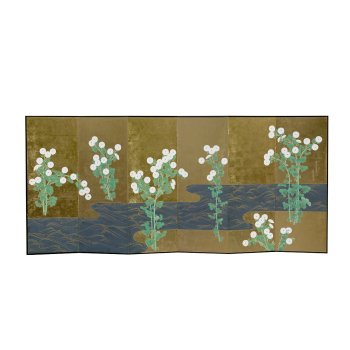
It is a work created by a follower of Mitsuru Ogata, a famous painter of the Edo period in Japan. This painting was created in the late 18th to early 19th century and is part of a set of works. It is a pair of six fold screens, using gold foil as the canvas, drawn with ink and color. The painting depicts chrysanthemums by the stream, showcasing the delicacy and elegance of traditional Japanese painting. Kobayashi Ogata himself lived between 1658 and 1716, and this artwork was created shortly after his death by his followers, reflecting his artistic style and influence. Currently collected at the Cleveland Museum of Art
Japanese Peony Ceramic Container - Cleveland Museum of Art
Japanese Peony Ceramic Container - Cleveland Museum of Art

It is a porcelain piece created by Seif ū Yohei III (Japan, 1851-1914), approximately made in 1914. Green glaze was used, and molding and carving techniques were employed in the design. This porcelain is collected by the Cleveland Museum of Art and was a gift donated by James and Christine Heusinger. It showcases the exquisite craftsmanship and aesthetic characteristics of Japanese porcelain art. Not only is it a practical water container, but it is also an exquisite artwork. The peony pattern on it symbolizes wealth and prosperity, reflecting the pursuit of beauty and appreciation of natural beauty in Eastern culture
Crane and Snake from the Warring States Period in China - Cleveland Museum of Art

Crane and Snake from the Warring States Period in China - Cleveland Museum of Art

It is a painted wooden carving from 475 BC to 221 BC, during the Warring States period of China, in the state of Chu (approximately 1046 BC to 223 BC). This work is said to come from Changsha, Hunan Province, China. Made of lacquered wood and using multi-color painting technology. Currently housed in the Cleveland Museum of Art, it was acquired by J. in 1938 H. Purchased by Wade Fund. Not only does it showcase the exquisite lacquerware craftsmanship and painting art of ancient China, but it also reflects the cultural characteristics and aesthetic style of the Chu state at that time, making it a valuable material for studying the history of ancient Chinese art.
Chinese snuff bottles from the Qianlong period of the Qing Dynasty - Cleveland Museum of Art

Chinese snuff bottles from the Qianlong period of the Qing Dynasty - Cleveland Museum of Art

It is a precious collection of the Cleveland Museum of Art, belonging to the Qianlong period of the Qing Dynasty in China (1736-1795). Emperor Qianlong is one of the famous emperors in Chinese history. This snuff bottle is made of copper and features painted enamel craftsmanship, which was highly valued at the time and typically only possessed by royalty and nobility. It is depicted with European figures, indicating that it may have been influenced by Western art or catered to the European market. This work is not only a practical container, but also a witness to the exchange of Chinese and Western cultures. By Noah L Mrs. Butkin donated it as a gift for the 75th anniversary of the museum's establishment.
Bronze water basin from the Goryeo period in South Korea - Cleveland Museum of Art

Bronze water basin from the Goryeo period in South Korea - Cleveland Museum of Art

It is a bronze water basin from the Goryeo period in Korea (918-1392), made around the 1100-1200s. The exquisite craftsmanship not only showcases the typical characteristics of Goryeo bronze ware in form, but also has exquisite character patterns and calligraphy engraved on its inner walls. These patterns and calligraphy not only have high artistic value, but also reflect the culture and aesthetic taste of the society at that time. This artwork is currently housed in the Cleveland Museum of Art and donated by the Leonard C. Hanna Foundation in 1985.
Dragon Cloud Pattern Porcelain Jar - Cleveland Museum of Art

Dragon Cloud Pattern Porcelain Jar - Cleveland Museum of Art

It is a Korean porcelain from the late Joseon Dynasty (late 1600s). It belongs to the Joseon Dynasty period (1392-1910) and was made using underglaze iron color technology. It is currently housed in the Cleveland Museum of Art and donated by the Leonard C. Hanna II Foundation in 1986. Not only does it showcase the exquisite craftsmanship of porcelain during the Joseon Dynasty, but its dragon cloud pattern design also reflects the aesthetic style and cultural characteristics of that time.
Apache Tray - Cleveland Museum of Art

Apache Tray - Cleveland Museum of Art

It is a tray from the Apache tribe in the early 20th century, belonging to the Western style of the southwestern United States. This tray is made using weaving technology, with specific dimensions of 13.3 cm x 52.4 cm. It was donated by William Albert Price to the Cleveland Museum of Art in memory of his wife. This collection not only showcases the weaving skills of the Apache people, but also reflects the level of craftsmanship and cultural characteristics of the early 20th century. It is currently housed in the Cleveland Museum of Art.
Portable Altar from the Roman Era - Cleveland Museum of Art

Portable Altar from the Roman Era - Cleveland Museum of Art

It is an 11th century Romanesque art piece, produced around 1045, possibly from Lower Saxony, Germany. Made of precious materials such as gold, enamel, porphyry, gemstones, pearls, black lacquer, and wood cores, it is collected at the Cleveland Museum of Art and is a gift from the John Huntington Institute of Art and Technology Trust Fund. It was commissioned by Countess Gertrude to commemorate her husband, Count Leopold, shortly after his death. There are four apostles worshiping the cross on the front, seven apostles on each side, and five apostles at the back. There is also a mechanism at the bottom to open and store items.
Silver Raft Cup - Cleveland Museum of Art
Silver Raft Cup - Cleveland Museum of Art

Made around 1345. This work is attributed to Zhu Bishan, welded from hammered silver pieces and decorated with chisels. It is now collected at the Cleveland Museum of Art. By JohnL Severance Fund was acquired in 1977. The figure on the cup is believed to be the messenger Zhang Qian. Legend has it that he got lost in the Milky Way and met the Weaver Girl, who gave him a stone from a loom. Zhang Qian actually holds a stone tablet with the inscription 'Weaving Machine Stone'. The production date, inscription, and seal of silversmith Zhu Bishan are all clearly visible on this silverware, demonstrating its historical and artistic value.
Nazca period pottery jars

Nazca period pottery jars

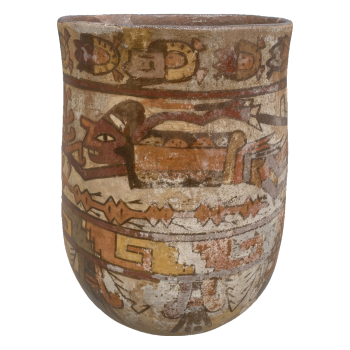
It is a ceramic artwork from the Nazca culture period collected by the Cleveland Museum of Art, approximately made between 450 and 600 AD. This ceramic vessel comes from the Nazca region on the southern coast of Peru and belongs to the 5th to 7th centuries. It is made of colored clay board and has an overall size of 19.4 x 14 centimeters (7 5/8 x 5 1/2 inches). This work is known for its vivid sculptural decoration, showcasing the ancient Nazca people's worship of war and human heads as spoils of war, and is an outstanding representative of pre Columbian South American art.
The "Winged Griffon Plate" from the Hefitalit Period - Cleveland Museum of Art
The "Winged Griffon Plate" from the Hefitalit Period - Cleveland Museum of Art

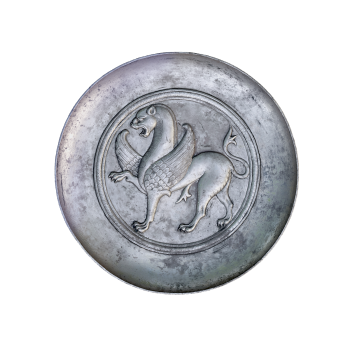
It is a silver artwork from the Sogdiana region, belonging to the Hephaetalite period, made around the 6th to 7th century. It showcases exquisite craftsmanship and unique aesthetic style. Winged lion is a creature in ancient mythology, often depicted with an eagle head and lion body, symbolizing strength and majesty. Collected at the Cleveland Museum of Art. This silver plate is not only a work of art, but also a witness to the exchange of ancient culture and art.
Wedgwood Cup Disc - Cleveland Museum of Art, UK

Wedgwood Cup Disc - Cleveland Museum of Art, UK

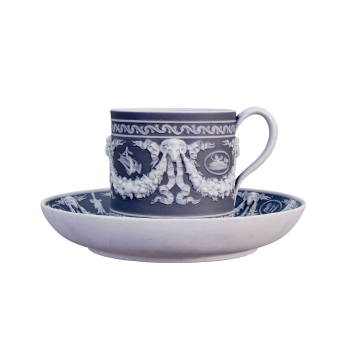
Produced around 1790 by the Wedgwood factory in England. It is a famous relief decorative style Wedgwood jade porcelain. It was done by Mrs Ms. John Sherwin donated to the Cleveland Museum of Art. Wedgwood jade porcelain is famous for its unique blue and white relief decorations, a style invented by Josiah Wedgwood in the 18th century, a renowned British potter and industrialist. The characteristics of jade porcelain are its hard texture and exquisite relief patterns, which are usually Greek mythology or classical themes.
Cleveland Museum of Art Silver Horn

Cleveland Museum of Art Silver Horn

The silverware collected by the Cleveland Museum of Art, made in about 700 AD, is from Central Asia or Xizang and belongs to the early works of the eighth century. Made of silver and decorated with gold plating, presenting a magnificent appearance. Showcased the creator's exquisite craftsmanship and delicate skills. The specific purpose is still unknown, but they may have been used as decorations for religious ceremonies or aristocratic residences. The design and decoration of the utensils used complex geometry, animal and plant patterns and character images, which showed the cultural characteristics and artistic style of Central Asia or Xizang at that time. It is the Cleveland Museum of Art through J H. One of the important collectibles purchased by the Wade Fund.
Cleveland Museum of Art silverware - Cup

Cleveland Museum of Art silverware - Cup

The silverware collected by the Cleveland Museum of Art, made in about 700 AD, is from Central Asia or Xizang and belongs to the early works of the eighth century. Made of silver and decorated with gold plating, presenting a magnificent appearance. Showcased the creator's exquisite craftsmanship and delicate skills. The specific purpose is still unknown, but they may have been used as decorations for religious ceremonies or aristocratic residences. The design and decoration of the utensils used complex geometry, animal and plant patterns and character images, which showed the cultural characteristics and artistic style of Central Asia or Xizang at that time. It is the Cleveland Museum of Art through J H. One of the important collectibles purchased by the Wade Fund.
Cleveland Museum of Art Silverware - Vase

Cleveland Museum of Art Silverware - Vase

The silverware collected by the Cleveland Museum of Art, made in about 700 AD, is from Central Asia or Xizang and belongs to the early works of the eighth century. Made of silver and decorated with gold plating, presenting a magnificent appearance. Showcased the creator's exquisite craftsmanship and delicate skills. The specific purpose is still unknown, but they may have been used as decorations for religious ceremonies or aristocratic residences. The design and decoration of the utensils used complex geometry, animal and plant patterns and character images, which showed the cultural characteristics and artistic style of Central Asia or Xizang at that time. It is the Cleveland Museum of Art through J H. One of the important collectibles purchased by the Wade Fund.
Scyphate Gold Bowl

Scyphate Gold Bowl

The gold bowl named Scyphate was created between 1059 and 1067, belonging to the Byzantine Empire period, which was Byzantine art in the 11th century. It is a shallow bowl commonly used for drinking alcohol or as a ceremonial utensil. With a diameter of 2.5 centimeters and made of pure gold, it showcases the exquisite metal craftsmanship and decorative art of the Byzantine period. Byzantine art is renowned for its ornate decorations, religious themes, and symbolism, and was used in religious ceremonies or court celebrations at the time. The design and production reflect the emphasis on refined living and religious beliefs in Byzantine culture. It is currently housed in the Cleveland Museum of Art.
Curved bowl with geometric patterns

Curved bowl with geometric patterns

It is a representative work of the Mimblesmogolon culture in Cameron Creek Village, New Mexico, created between 1000 and 1130 AD. It is made of ceramics and talc. The characteristic is its unique geometric design, which showcases the exquisite craftsmanship of the Mimbules Mogolon culture in ceramic art. The surface of the bowl is decorated with exquisite geometric patterns, which may have specific cultural or symbolic meanings. This artwork is part of the collection of the Charles Hackney Endowment Fund at the Cleveland Museum of Art. It is currently housed in the Cleveland Museum of Art.
Danbo fired pottery

Danbo fired pottery

It is a ceramic artwork from the Muromachi period in 15th century Japan, collected by the Cleveland Museum of Art. This pottery jar is made of natural gray glazed stone tools, with a diameter of 39 centimeters and a total height of 45 centimeters. It was once used as a storage container for rice or other grains, and was the work of a potter in the Tanba region, a fertile area located in western Kyoto. This pottery jar is not only practical, but also showcases the aesthetic craftsmanship of Japanese Tanba ceramics. The Cleveland Museum of Art acquired this collection through Severance and Greta Millikin purchase funds.
1 2 3 4 Next